When Teaching Mirrors Learning
Unpacking the DNA of Learning ©2026
This is more than a book. It’s a movement.
And it begins with seeing learning differently—perhaps for the first time in a long while.
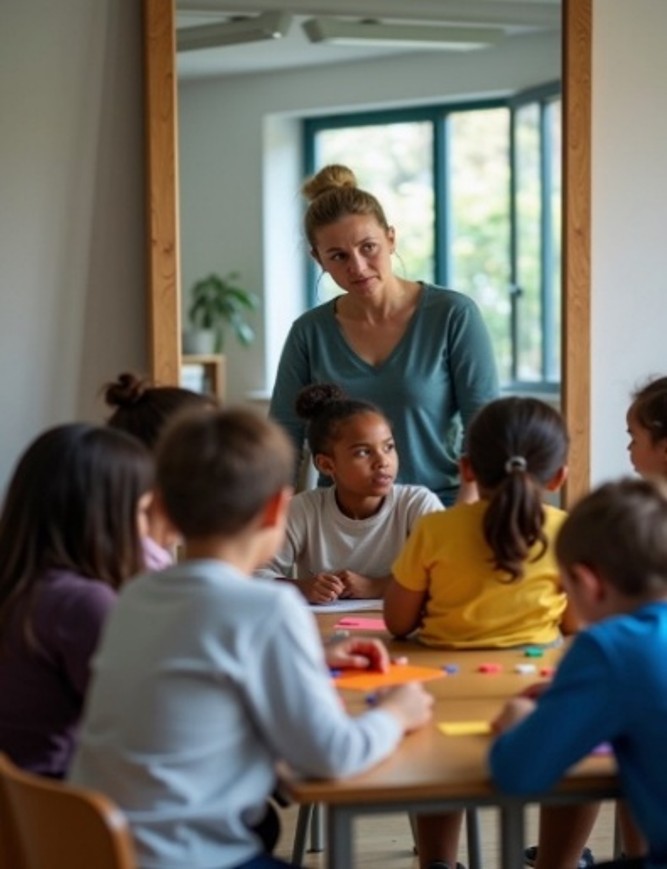
In every generation, a question pulses beneath the drone of educational reforms, testing mandates, and one-size-fits-all curriculum frameworks: Are our children prepared to learn for life—or are we simply teaching them how to get through school?
The ideas and tools that follow in When Teaching Mirrors Learning offer more than just a roadmap for preparing lifelong learners—they offer a mirror. A mirror that invites educators, parents, policymakers, and community leaders to reflect deeply on how we’ve been approaching education.
NOT…another bright, shiny thing. NOT a new trend that will be here today and gone in the next publication cycle. This is a return to what we professionals inherently know to be true: learning is deeply personal, inherently social, emotionally charged, and shaped by context. And teaching, at its best, doesn’t just deliver information—it nurtures curiosity, fosters connection, and creates environments for understanding to emerge and to stick.
This book doesn’t shy away from what’s broken, but it doesn’t surrender to it either.
Instead, it lights a path forward. As you read, you’ll discover how the “DNA of Learning” deconstructs what has long been missing from our industrial-era school structures. Whether you’re new to education or have weathered decades of reform, you’ll find this book both affirming and challenging. The world, of course, is not waiting. Our children are growing up in a time of unprecedented access to information, yes—but also unprecedented distraction, disconnection, and disorientation. We owe them more than reactive solutions. We owe them a system that sees them and understands them. A system that mirrors how they actually learn.
 This book is to be read not just with your mind, but with your heart.
Their story begins at a picnic table during a pandemic, grounded in the honest fear and uncertainty seen through a granddaughter’s eyes. The authors do what great teachers do—they listen, observe, and then respond with insight, intention, and compassion. Their work here is a powerful call to recenter—to stop asking “How do I teach this?” and start asking “How will they learn this?”
Let it stir your memories of moments when learning felt alive—and your imagination for what schools can become when teaching and learning are no longer on parallel tracks, but mirror images of one another.
Elaine Millen
Bob Greenleaf
bob@greenleaflearning.com